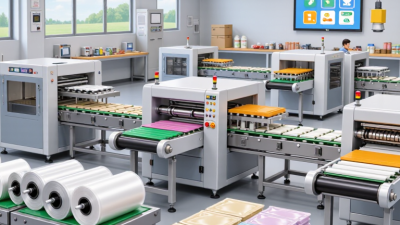
Why Choose a Pouch Sealing Machine?
Choosing the right pouch sealing machine can improve production consistency, product protection, and daily workflow. It is not simply a faster way to close bags. The machine must match the pouch material, seal width, filling speed, and product sensitivity.
Packaging machinery author and consultant John R. Henry once observed, “The best packaging machine is the one that consistently produces a quality package at the lowest total cost.” This principle remains practical on a busy production floor. A reliable machine creates uniform seals across hundreds of pouches. Operators can monitor temperature, sealing pressure, and conveyor movement more easily. Clear controls also reduce training time.
Small details matter. A weak seal may appear acceptable under bright factory lighting. Later, air can enter during transport. Excessive heat can wrinkle laminated film or damage delicate products. A well-adjusted pouch sealing machine helps prevent these problems through stable temperature control and repeatable jaw pressure.
There is no perfect machine for every application. That deserves honest consideration. Some models require manual alignment. Others need regular cleaning around the sealing jaws. Film thickness can also change performance. However, selecting equipment based on real production tests makes the decision more reliable. Trial runs should examine seal strength, appearance, speed, and operator workload.
For food, pharmaceutical, cosmetic, and household products, hygienic construction and documented quality checks are essential. Safety features matter, too. The best choice is not always the most expensive model. It is the machine that delivers dependable seals, manageable maintenance, and measurable value over time.
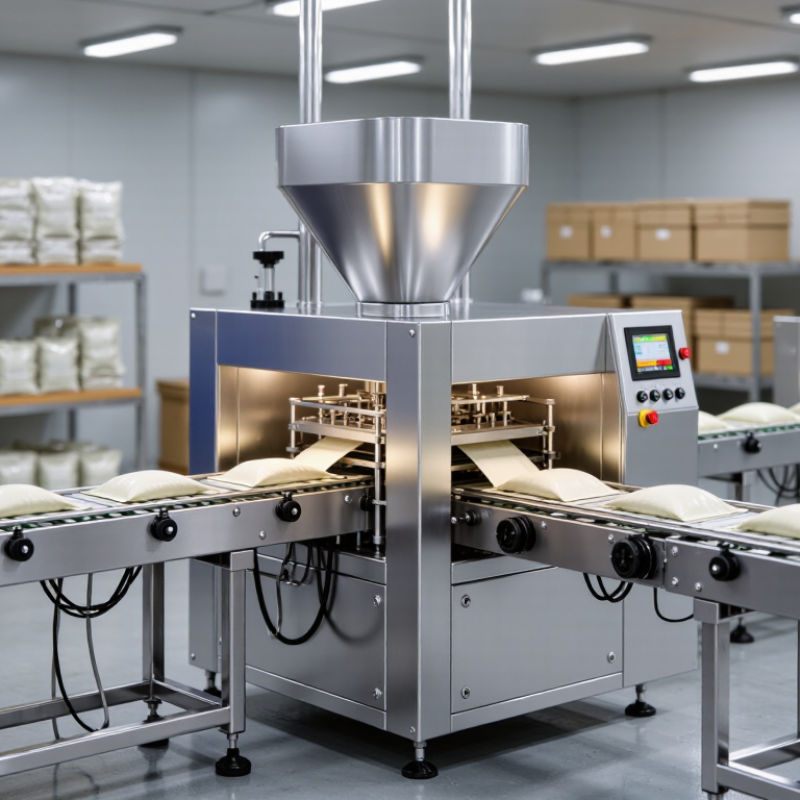
Flexible Packaging’s $40.6B U.S. Market Favors Pouch Sealing (FPA)
Why choose a pouch sealing machine? The answer becomes clearer as the U.S. flexible packaging market expands. Flexible Packaging Association reporting values this market at about $40.6 billion. That scale reflects strong demand for lightweight, space-efficient packs across food, personal care, and household products.
Pouch sealing equipment supports this demand with controlled heat, pressure, and dwell time. These settings help create consistent seals on films, laminates, and gusseted pouches. Operators can also adjust production speeds for different pouch sizes. On a busy line, a stable seal can reduce leaks, rework, and material waste. The fit matters. A fast machine is not automatically the best machine.
From practical production work, seal failures often come from contamination, uneven filling, or incorrect temperature settings. The machine may receive the blame unfairly. Reliable operations require routine calibration, seal-strength checks, and clear maintenance records. A simple test can reveal weak edges before products leave the facility. Pouch sealing also uses less storage space than many rigid formats, which can improve warehouse handling and transport efficiency. However, flexible films can be difficult to recycle in some local systems. That limitation deserves honest evaluation. Companies should match sealing equipment with their film structure, output volume, quality controls, and packaging goals.
How Heat, Pressure, and Dwell Time Create Reliable Pouch Seals
A pouch sealing machine earns its value through controlled heat, pressure, and dwell time. Each variable affects the seal differently. Heat softens the inner film layer. Pressure brings both layers into close contact. Dwell time allows the softened material to bond evenly.
The Flexible Packaging Association reported more than 40 billion dollars in U.S. flexible packaging sales in 2023. That scale reflects a simple need: consistent seals across millions of packages. In production, operators often begin with the film supplier’s recommended temperature range. They then adjust pressure and dwell time through seal-strength tests. ASTM F88/F88M provides a recognized method for measuring seal strength. A seal may look smooth but still peel too easily.
Too much heat can wrinkle film, weaken layers, or leave burnt edges. Too much pressure may squeeze out the softened material. Short dwell time can create a weak center seam.
I have seen settings pass visual inspection and fail during a gentle pull test. That mistake is easy to repeat. ISO 11607 also emphasizes process control for packaging intended to maintain product integrity.
Regular checks should include temperature verification, jaw alignment, seal width, and sample testing. Real conditions matter, including film thickness, pouch contamination, and machine speed. A stable setting is useful, but not permanent.
ASTM F88 Quantifies Seal Strength for Pouch Quality Control
Why Choose a Pouch Sealing Machine? Because repeatability matters when flexible packaging faces heat, pressure, and handling.
ASTM F88/F88M provides a recognized method for measuring the force needed to separate a seal. This value, usually reported in N/15 mm or N/25 mm, turns visual inspection into usable process data. The test cuts a sealed pouch into strips, pulls the seal, and records peak force and failure mode. Small details matter. Seal width, jaw temperature, dwell time, and cooling can change the result.
Smithers’ The Future of Global Flexible Packaging to 2028 forecasts that the flexible packaging market will exceed 300 billion dollars by 2028. This growth increases pressure to control material variation and reduce avoidable rejects. A pouch sealing machine supports this work by controlling temperature and pressure more consistently than manual sealing. Operators can sample pouches at planned intervals and compare results against internal specifications. ASTM F88 does not establish one universal pass value. Each product requires evidence from its film structure, filling conditions, and distribution risks. A high number can still hide weak corners or channels.
In practice, technicians should condition samples before testing and record jaw settings beside every result. A force curve can reveal peelable, cohesive, or adhesive failure. That description may explain more than the peak number alone. Our first trials may look acceptable, yet repeated testing can expose drift during long production runs. That is the uncomfortable part. Statistical process control, calibration records, and retained samples make decisions more defensible. ASTM provides the measurement language; disciplined machine control gives it meaning.
Sources: ASTM F88/F88M-23; Smithers, The Future of Global Flexible Packaging to 2028.
ASTM F1929 and F2096 Identify Channel and Gross Package Leaks
Why Choose a Pouch Sealing Machine?
ASTM F1929 and F2096 Identify Channel and Gross Package Leaks
A pouch sealing machine controls temperature, pressure, and dwell time more consistently than manual sealing. That consistency matters because ASTM F1929 detects channel leaks with dye penetration, while ASTM F2096 reveals gross leaks through bubble emission. One test follows a narrow path. The other exposes larger failures.
A practical sealing review should examine the pouch edge under magnification. Look for wrinkles, weak corners, trapped product, and uneven seal width. These small defects can create channels that remain invisible during routine handling. ASTM F1929 is especially useful for porous medical packaging, where dye can travel through a damaged seal. ASTM F2096 pressurizes the package and observes escaping bubbles. It is direct, visual, and useful during process validation.
PMMI’s 2024 State of the Industry report places U.S. packaging machinery shipments at approximately 11.3 billion dollars in 2023. That investment reflects rising demand for repeatable automation, not a guarantee of seal quality. A machine can produce bad seals very efficiently. This is where judgment still matters. Testing samples at defined intervals, recording seal conditions, and investigating failures support reliable decisions. The standards identify leaks; they do not repair poor material selection or weak process control.
| Data Dimension | ASTM F1929: Dye Penetration | ASTM F2096: Bubble Emission | Relevance to a Pouch Sealing Machine |
|---|---|---|---|
| Standard purpose | Standard test method for detecting channel leaks in porous medical packaging by dye penetration. | Standard test method for detecting gross leaks in packaging by internal pressurization and bubble emission. | Provides an objective way to check whether pouch seals produced during the sealing process remain intact. |
| Primary leak type | Channel leak: a continuous open pathway through or along the seal that can allow dye to pass. | Gross leak: a relatively large opening or defect that allows pressurized air to escape and form visible bubbles. | Using both methods helps distinguish fine seal-channel defects from larger package openings. |
| Detection principle | A dye solution is applied to the specified seal area and examined for dye penetration through a leak path. | The package is internally pressurized while submerged in liquid; escaping air is observed as a continuous stream of bubbles. | Sealing equipment can be evaluated with tests based on the actual failure mode of the pouch. |
| Typical package consideration | Designed for porous medical packaging and seal areas where dye access and visual inspection are appropriate. | Applicable to packages that can be safely pressurized and immersed without changing the leak condition. | Machine settings and pouch construction should be selected so that the finished package is compatible with the intended test method. |
| What the result indicates | Evidence of dye penetration indicates a channel leak in the inspected seal area. | Visible, continuous bubbles indicate a gross leak under the test conditions. | Test results support process verification, seal-setting optimization, and investigation of rejected pouches. |
| Main sealing variables to control | Seal temperature, pressure, dwell time, sealing-jaw alignment, material cleanliness, and seal width. | Seal temperature, pressure, dwell time, cooling conditions, package inflation behavior, and seal uniformity. | A pouch sealing machine is valuable because it helps maintain repeatable heat, pressure, and dwell conditions. |
| Common defect sources | Wrinkles, contamination, incomplete fusion, insufficient heat, low pressure, short dwell time, or uneven sealing jaws. | Open seals, punctures, tears, channel defects, poor corner formation, or severe material damage. | Consistent machine setup reduces variation caused by operator technique and unstable sealing parameters. |
| Inspection output | Visual evidence of dye movement through the seal or a pass result when no channel penetration is observed. | Visual evidence of bubble formation or a pass result when no gross leakage is observed under the selected conditions. | Both methods should be documented with the package type, seal area, test conditions, observations, and final disposition. |
| Best quality objective | Confirm that the seal does not contain an identifiable continuous channel under the test procedure. | Confirm that the package does not contain a detectable gross leak under the test procedure. | Combining reliable sealing equipment with appropriate leak testing improves package-integrity control. |
| Important limitation | Results depend on the specified test procedure, dye application, inspection conditions, and package construction. | Results depend on the selected pressure, immersion conditions, observation time, package design, and safe test limits. | Neither method replaces process validation, material qualification, or compliance with the applicable packaging requirements. |
| Practical conclusion | Channel-leak focus | Gross-leak focus | A controlled pouch sealing process, followed by suitable ASTM-based testing, helps verify that seals are consistent and packaging defects are identified before release. |
ISO 11607 Connects Seal Validation with Sterile-Barrier Performance
Why Choose a Pouch Sealing Machine?
ISO 11607 treats sealing as part of the sterile-barrier system, not as an isolated production step. A pouch may look clean while its seal contains weak points, channels, or uneven bonding. These defects can allow contamination after sterilization, transport, or storage. A controlled pouch sealing machine helps manage temperature, pressure, and dwell time with greater consistency. It also creates records that support process validation and routine monitoring.
Seal validation should reflect real use. Teams commonly assess seal strength, visual quality, package integrity, and performance after conditioning or distribution simulation. The machine setting is only one factor. Film structure, pouch dimensions, alignment, and operator handling can change the result. A practical detail matters: even a small wrinkle near the seal area may create a leak path. A “perfect” seal is difficult to define without agreed acceptance criteria. That is where careful testing becomes essential.
Tips: Record sealing parameters for every production run. Inspect the full seal width, not only its center. Challenge samples after aging or transport simulation. Review failures without blaming operators; equipment settings, materials, and training may all contribute. Some teams validate thoroughly but monitor too little afterward. That gap deserves attention.
Why Choose a Pouch Sealing Machine?
ISO 11607 connects the sealing process with sterile-barrier performance. The chart maps commonly used standards and their primary relevance to seal validation and sterile-barrier evaluation. A value of 1 indicates direct relevance; it is not a pass/fail score or an acceptance limit.
ISO 11607-1 addresses sterile-barrier system requirements, while ISO 11607-2 addresses forming, sealing and assembly process validation. ASTM F88/F88M evaluates seal strength, ASTM F1929 evaluates dye penetration leaks in porous medical packaging, and ASTM F2096 evaluates gross leaks by internal pressurization. Actual acceptance criteria must be established for the specific packaging system and validated process.
Related Posts
-
How to Choose the Best Pouch Sealing Machine in 2026?
-
7 Compelling Reasons Your Business Needs an Automatic Packaging Machine Today
-
Choosing a Reliable Manufacturer for the Best Pouch Sealing Machines with Industry Insights
-
Exploring the Features and Applications of Various Coffee Packaging Machines How to Choose the Best One
-
7 Effective Tips for Choosing the Right Food Packing Machine
-
How to Choose the Right Sachet Filling Machine for Your Business Needs