
Top 5 UV Flatbed Printers for Your Business Needs?
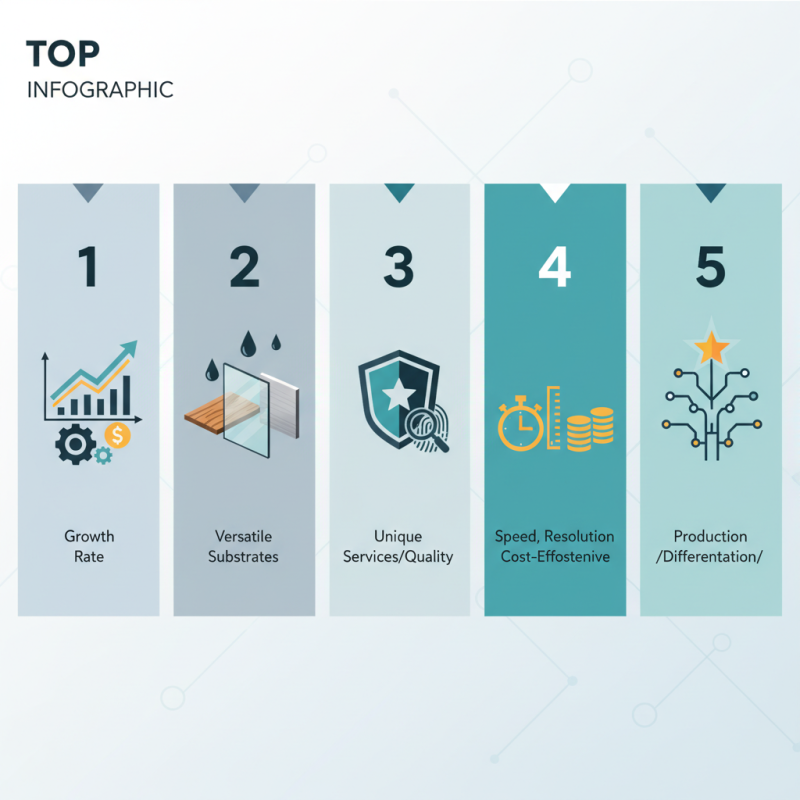
In the competitive landscape of printing technology, the UV Flatbed Printer has become a vital tool for many businesses. Recent market research indicates that the UV printing industry is projected to grow at a compound annual growth rate of 7.5% from 2021 to 2026. This growth highlights the increasing demand for high-quality, versatile printing solutions. The UV Flatbed Printer stands out due to its ability to print on a wide variety of substrates, including wood, glass, and metal, making it suitable for diverse applications.
Businesses are recognizing the necessity for reliable printers that deliver excellent results. According to a recent survey, 62% of print service providers noted that offering unique services is essential for staying competitive. However, not all UV Flatbed Printers are created equal, and choosing the right one can be daunting. Factors such as print speed, resolution, and cost-effectiveness must be considered carefully.
As companies invest in UV technology, the options seem plentiful but require discernment. It’s essential to weigh the strengths and weaknesses of various models. Understanding your specific business needs is key to making an informed choice. Investing in a quality UV Flatbed Printer can reshape your production capabilities and enhance your service offerings. The right decision can differentiate a company from its competitors.
Overview of UV Flatbed Printers and Their Benefits for Businesses
UV flatbed printers have revolutionized the printing industry with their versatility and efficiency. These machines can print directly onto various substrates, from wood to glass. According to a report by Smithers Pira, the global market for UV printing is projected to reach $28 billion by 2025. This growth is attributed to the unique benefits that UV technology offers businesses.
One significant advantage is the immediate curing of ink using UV light. This results in faster production times and less waste. Unlike traditional inks, UV inks provide vibrant colors and better durability. Businesses often report a 30% increase in productivity when switching to UV technology. Additionally, UV printers contribute to sustainability efforts. They emit fewer volatile organic compounds and allow businesses to offer eco-friendly printing options.
There are challenges to consider. The initial investment can be high, which may deter some companies. Maintenance requirements may also be more demanding compared to conventional printers. Despite these drawbacks, the long-term benefits often outweigh the negatives. Many businesses find that the quality and efficiency improvements lead to higher customer satisfaction and increased revenue. This makes UV flatbed printers a compelling option for forward-thinking companies.
Key Features to Consider When Choosing a UV Flatbed Printer
When selecting a UV flatbed printer for your business, there are several key features to consider. One critical aspect is the print resolution. Higher resolutions yield sharper images. Look for printers that offer a minimum of 1200 dpi. This detail will ensure your prints meet professional standards and appeal to customers.
Another important feature is the printing size. Assess the maximum print area. A larger print bed allows for more versatility. It’s beneficial for handling various materials. Evaluate your business needs carefully. You might need to produce large signs or banners, for example.
Tips: Always research the specifications. Don’t rush into a purchase. Take the time to assess how the printer will fit into your workflow. Speak with industry peers for their experiences. Understanding their successes and failures can guide your decision. Additionally, consider the software compatibility. Some models come with better support for design applications, enhancing efficiency.
Finally, energy consumption should not be overlooked. Certain printers can consume excessive power, impacting operational costs. Look for energy-efficient options that balance performance and sustainability. Keep these elements in mind to find the right UV flatbed printer for your business's unique needs.
Top Brands and Models of UV Flatbed Printers for 2023
Choosing the right UV flatbed printer can significantly impact your business. The market for these printers is projected to grow substantially, with a report by Smithers estimating an increase in demand by over 20% annually. This growth highlights the need for precision and advanced technology in printing solutions.
When evaluating models, consider the capabilities and features that different brands offer. Some printers provide exceptional color reproduction, enabling high-quality graphics. Others focus on speed, catering to businesses that require quick turnaround times. Reports indicate that efficiency and durability are vital for long-term investments in printing technology.
Many businesses face challenges when selecting the best printer. Along with performance, cost, and maintenance play crucial roles. Some models, though feature-rich, come with hidden costs in upkeep. Assessing your specific needs and budget can help avoid overspending on underutilized features. Some users report that the initial excitement can fade when ongoing costs are higher than expected. Thus, thorough research and evaluation are imperative for making an informed decision.
Comparative Analysis of Performance and Cost of Leading UV Printers
When exploring the top UV flatbed printers for business needs, performance and cost are often at the forefront. Every business has unique requirements, making it essential to analyze these aspects thoroughly. The right printer should enhance productivity while fitting within budget constraints.
In terms of performance, speed and print quality play vital roles. Many printers offer impressive resolution, which can elevate the appearance of printed materials. However, high-resolution printing often comes at a higher cost. Balancing quality and cost could pose challenges. For some businesses, investing in a top-tier model may lead to better long-term results, while others might struggle with the initial price tag.
Reliability is another critical factor. Some printers may require frequent maintenance or could have compatibility issues with different substrates. This unpredictability can cause delays. Ensuring a reliable machine can save both time and money. Each choice comes with trade-offs. Careful research and analysis can lead to finding the best fit for individual business needs.
Top 5 UV Flatbed Printers for Your Business Needs
| Model | Printing Speed (sqm/h) | Max Print Area (mm) | Resolution (dpi) | Cost (USD) | Key Features |
|---|---|---|---|---|---|
| Model A | 45 | 2500 x 1300 | 1200 | 25,000 | Fast printing, Durable inks, Multi-material support |
| Model B | 50 | 3000 x 2000 | 1440 | 30,000 | High resolution, Enhanced color range, Eco-friendly inks |
| Model C | 40 | 2500 x 1500 | 600 | 20,000 | Compact design, Reliable operation, Competitive pricing |
| Model D | 55 | 3200 x 2200 | 720 | 40,000 | Versatile applications, High-capacity ink tanks, User-friendly interface |
| Model E | 42 | 2500 x 3000 | 1200 | 22,500 | Automated setup, Quick changeovers, Excellent print quality |
Real-World Applications and Case Studies of UV Flatbed Printing
UV flatbed printing has transformed various industries with versatile applications. For example, in the signage sector, companies have used UV printers to produce vibrant, durable displays. A study from Smithers Pira indicates that the global digital printing market, including UV flatbed technology, is projected to grow at a CAGR of 11% from 2019 to 2024. Such growth reflects the increasing demand for custom and high-quality printed materials.
In the interior décor space, UV printing enables businesses to create unique wall graphics and custom furniture designs. A case study showed a local design firm that improved their offering by incorporating UV technology. Their projects gained a 30% increase in client satisfaction, owing to the vivid colors and intricate detail. However, challenges remain, such as the initial investment cost and learning curve associated with new equipment.
In packaging, the adaptability of UV flatbed printers has introduced new capabilities. A notable application is the printing of rigid substrates that were previously difficult to customize. For instance, studies highlight that companies can reduce waste and enhance precision compared to traditional methods. Companies are encouraged to weigh the benefits against potential hurdles, such as the need for skilled operators and ongoing maintenance.
