
Top 10 Barcode Printer Labels for Businesses
A barcode label looks simple: a printed pattern, a clear surface, and an adhesive backing. In daily operations, each part matters. A label on a chilled carton faces moisture and temperature changes. One on a warehouse shelf must remain readable after handling, dust, and friction. Choosing barcode printer labels is therefore about more than price or print speed.
George Laurer, the IBM engineer who helped develop the UPC, offers a useful historical reference. Rather than attribute an unverified quotation to him, we can draw a practical lesson from his work: a barcode is useful only when it can be read reliably. That principle guides this Top 10 overview. It compares label options by print compatibility, material, adhesive, durability, and typical business use. Small details count. A roll that fits the printer but uses the wrong core size can interrupt a shift. A label that scans indoors may not hold up on a damp package. Not every business needs the toughest stock, either. The right choice depends on the surface, environment, printer, and time the label must remain legible. This guide gives buyers a grounded starting point, while leaving room to test labels in their actual workflow.
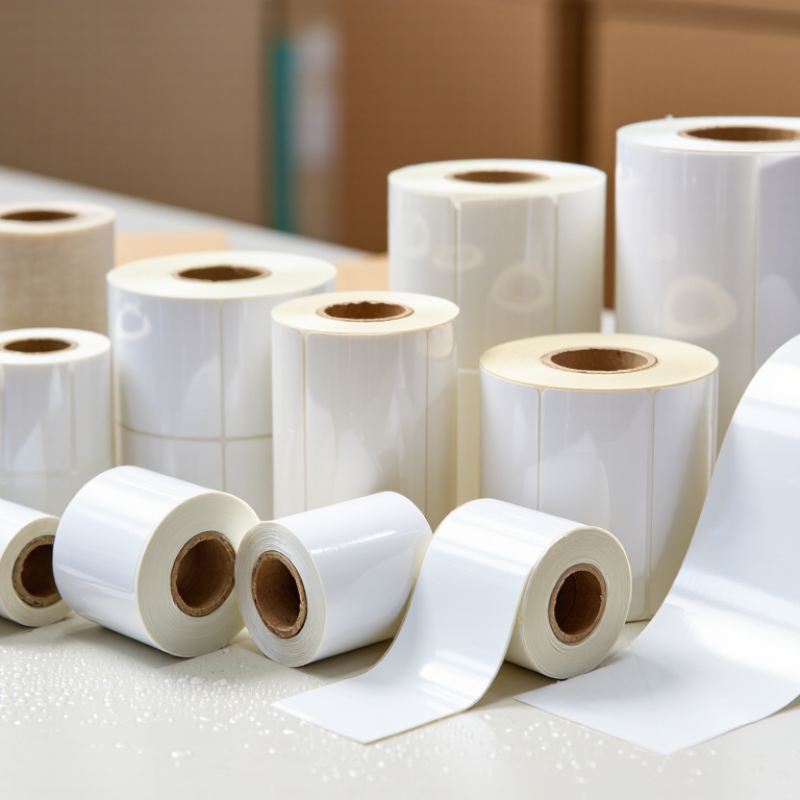
Understanding Barcode Printer Labels and Their Business Uses
Barcode printer labels turn product details into information that scanners can read quickly. Businesses use them on cartons, shelves, parts, and shipping packages. A warehouse worker can scan a small label to confirm an item’s identity and location, rather than typing a long code. These labels also support stock counts and order tracking. But the printer, label material, and scanner must work together.
Label choice depends on the environment. Paper labels suit many dry, indoor uses, while synthetic materials can better withstand moisture or abrasion. A label on a chilled carton needs different properties from one on a dusty storage bin. The MHI 2024 Annual Industry Report found that 55% of surveyed supply chain professionals planned to increase investment in technology and innovation. Barcode systems are one practical part of that wider effort, though a label alone cannot fix inaccurate product data or poor scanning habits. Small details matter.
Tips: Match the label material to its surface and surroundings. Test a sample where it will actually be used. Check that printed bars scan cleanly after handling. Don’t skip that step.
Factors to Consider When Choosing Barcode Printer Labels
Barcode labels are small, but the wrong stock can stop a busy packing bench. Match the label to the printer first: direct thermal printing needs no ribbon, while thermal transfer uses one for durable results. Check printer resolution, roll width, core size, and winding direction before ordering. MHI’s 2024 Annual Industry Report found that 55% of surveyed supply chain professionals planned to increase investment in innovation. Reliable labeling is a modest, practical part of that work. Still, a specification sheet cannot predict every snag.
Choose the face material and adhesive for the actual journey. Paper suits many dry indoor cartons; synthetic stock handles moisture and abrasion better. Cold storage needs an adhesive tested at application temperature, not just room temperature. Consider how long labels must remain readable, and test scans after rubbing, chilling, or exposure to dust. A 2023 Warehousing Vision Study reported that 87% of warehouse decision-makers planned to increase technology investment by 2028. That broader shift makes dependable data capture more important. I would not trust a neat sample alone. Run a small batch on real cartons, then check quiet details: curled corners, smeared bars, and labels that lift at the edges.
Top 10 Barcode Printer Labels for Businesses — Factors to Consider When Choosing Barcode Printer Labels
Compare common label constructions by printing method, durability, adhesive, and typical application. Label performance depends on the specific material, adhesive, printer settings, and operating conditions.
| Label Type | Typical Face Material | Printer Method | Typical Adhesive | Suitable Conditions | Common Business Uses | Key Selection Consideration |
|---|---|---|---|---|---|---|
| Standard Direct Thermal Paper | Uncoated or lightly coated heat-sensitive paper | Direct thermal; no ribbon | General-purpose permanent acrylic or rubber adhesive | Dry, indoor, short-term use; sensitive to heat, light, and abrasion | Short-term shipping labels, receipts, and temporary inventory labels | Choose it for economical, short-life labels; avoid prolonged heat or sunlight exposure. |
| Top-Coated Direct Thermal Paper | Heat-sensitive paper with a protective top coating | Direct thermal; no ribbon | General-purpose permanent adhesive | Indoor handling with better resistance to moisture, scuffing, and oils than standard direct thermal paper | Parcel labels, retail labels, and distribution-center labels | Confirm the coating suits the expected handling and storage period; it is still a paper label. |
| Thermal Transfer Paper | Coated or uncoated paper | Thermal transfer; requires a compatible ribbon | Permanent or removable, depending on the application | Indoor use; print durability depends on the paper and ribbon combination | Product identification, shelf labels, and general-purpose inventory labeling | Match the ribbon formulation to the label coating and verify barcode readability after handling. |
| Polypropylene Film | White, clear, or silver polypropylene film | Usually thermal transfer; verify printer and stock compatibility | Permanent acrylic or application-specific adhesive | More resistant to moisture and tearing than paper; suitability varies with temperature and chemicals | Packaging, containers, and product labels exposed to routine handling | Check surface compatibility, exposure conditions, and ribbon match; film stock may require different printer settings. |
| Polyester Film | White, clear, or metallized polyester film | Usually thermal transfer with a compatible ribbon | Permanent adhesive selected for the substrate | Suitable for demanding applications when the material, adhesive, and ribbon are specified for the environment | Equipment identification, durable asset labels, and industrial product identification | Specify the required resistance to heat, abrasion, chemicals, or weather; performance is construction-dependent. |
| Freezer-Grade Label | Paper or film face stock designed for cold-chain use | Direct thermal or thermal transfer, according to the face stock | Low-temperature or freezer-grade adhesive | Designed for cold storage; application temperature and condensation tolerance vary by product | Frozen food, laboratory samples, and refrigerated inventory | Check both application temperature and service temperature, plus whether labels are applied before or after chilling. |
| Removable Label | Paper or film face stock | Direct thermal or thermal transfer, as specified | Removable adhesive | Temporary identification on compatible, clean surfaces | Reusable containers, temporary pricing, and short-term location marking | Test removal on the actual surface; dwell time, temperature, and surface finish can affect residue or removability. |
| High-Tack Label | Paper or film face stock | Direct thermal or thermal transfer, as specified | High-tack permanent adhesive | For challenging surfaces such as some textured, curved, or low-surface-energy materials; results depend on the adhesive | Rough cartons, bins, and hard-to-label packaging | Test adhesion on the real substrate, especially if it is dusty, curved, cold, or made from a low-energy plastic. |
| Weather-Resistant Synthetic Label | Durable film face stock, commonly polypropylene or polyester | Usually thermal transfer with a compatible ribbon | Permanent adhesive rated for the intended surface and exposure | Outdoor or damp settings when the complete label construction is specified for those conditions | Outdoor assets, storage areas, and equipment exposed to moisture | Check UV, water, temperature, and abrasion requirements; a synthetic face alone does not guarantee weather resistance. |
| Tamper-Evident Label | Destructible film, void-forming film, or other security-style construction | Usually thermal transfer; confirm compatibility with the stock | Security adhesive designed to show evidence of removal | Applied to clean, compatible surfaces; tamper evidence depends on surface and application conditions | Warranty seals, access control, and product or package security | Choose the required evidence-of-removal behavior and test it on the actual substrate before deployment. |
Before ordering: Confirm printer compatibility, label width and core size, gap or black-mark sensing, roll orientation, barcode dimensions, adhesive performance, and the expected storage and service conditions. Test sample labels on the intended printer and application surface.
Top 10 Barcode Printer Labels for Different Business Needs
Top 10 Barcode Printer Labels for Businesses
Top 10 Barcode Printer Labels for Different Business Needs
The right label depends on where it will live, what it must survive, and how often it is scanned. MHI’s 2024 Annual Industry Report found that 55% of surveyed supply-chain leaders planned to adopt robotics and automation within five years. Clear, consistent barcodes can support those workflows, but the label and printer must work together. For shipping, consider direct-thermal labels for short-term use or thermal-transfer labels for longer-lasting marks. Paper shelf labels suit indoor retail; polypropylene handles occasional moisture better. Polyester asset labels resist wear. Freezer labels are made for cold surfaces, while tamper-evident labels show disturbance. Small-format product labels fit tight packaging. High-visibility pick-bin labels help workers spot locations. Wristband labels serve patient or event identification needs. Ten options, distinct jobs.
Material alone does not guarantee a readable scan. Adhesive, surface texture, print contrast, barcode size, and ribbon compatibility all matter. I still see teams underestimate condensation: a label that looks fine on a warm bench may lift after entering a cold room. Test the actual printer, scanner, and surface before ordering in bulk.
Tips: Print a sample and scan it at the distance workers will use. Check edges, smudges, and adhesion after handling. Keep spare rolls dry and matched to the printer.
Comparing Label Materials, Adhesives, and Printer Compatibility
Top 10 Barcode Printer Labels for Businesses
Grand View Research valued the global labels market at USD 67.02 billion in 2023. Its market analysis highlights how widely labels support everyday operations. For barcode printing, the best label depends on where it will live. Paper labels suit dry, short-term uses such as shelf tags. Synthetic films, including polypropylene or polyester, better withstand moisture, abrasion, and handling. Small details matter.
Direct thermal printers create images through heat, so they need no ribbon. Their labels can fade with heat, sunlight, or time. Thermal-transfer printers use a ribbon and can produce more durable prints, but the ribbon must match the label face material. Always check the printer’s supported media width, roll core, and sensor type. A label that fits the printer may still feed poorly. Test a short roll.
Adhesive choice deserves equal care. Standard permanent adhesive often works on clean cardboard, while cold storage, textured cartons, or curved containers may need a purpose-designed adhesive. Surface temperature during application matters, too. A cold package can defeat an otherwise suitable label. For top-ten comparisons, weigh material, adhesive, and printer compatibility together—not price alone. I would run a small pilot on the actual package; specifications do not catch every surprise.
Top 10 Barcode Printer Labels: Materials & Printer Compatibility
Common availability of direct thermal and thermal transfer constructions by label material
A value of 1 means that construction is commonly available for the printing method; 0 means it is not typical. Film stocks such as polypropylene may be offered for either method when specially coated. Adhesives—including permanent, removable, and wash-off—are selected separately and can affect the application. Always check the label and ribbon specifications against the printer.
Best Practices for Printing and Applying Barcode Labels
Choose label material for the surface and conditions it will face. A cold carton, a dusty bin, and a smooth plastic case may need different adhesives. Match the label stock to your printer, then set print speed and darkness according to the stock guidance. Print a sample. Check that bars have clean edges and spaces remain clear. Small test, big difference.
Apply labels to clean, dry, flat areas. Dust, oil, and moisture can weaken adhesion, while seams and sharp curves can distort a barcode. Keep the code and its clear margins unobstructed. Press from the center outward to reduce bubbles, especially on rounded containers. Let the label settle before handling when the adhesive instructions recommend it.
Scan a sample after printing and again after applying it. Test at the distance and angle staff will use, not only at a desk. Compare the decoded number with the intended inventory record; a readable code can still contain the wrong data. Check labels from each new roll or print batch. One detail is easy to miss: glare from clear coatings can trouble some scanners. If a scan fails, inspect the label and lighting before changing the scanner settings. No setup is perfect, so record recurring failures and adjust the process.
