How to Choose the Best Wood Humidor Box?
Choosing the right Wood Humidor Box requires more than admiring polished panels and brass hinges. A reliable humidor should protect cigars from unstable temperature, excessive dryness, and sudden moisture changes. The Cigar Association of America’s market reports show continuing demand for premium cigars and related storage products. That demand makes construction quality increasingly important. Buyers now expect attractive design, dependable sealing, and measurable humidity control.
Wood selection matters greatly. Spanish cedar remains popular because it absorbs and releases moisture gradually. It also contributes a distinctive, clean aroma. However, “cedar” labels can be confusing. Some products use aromatic cedar, veneered boards, or mixed woods without clear specifications. The USDA Forest Products Laboratory’s Wood Handbook explains that wood moisture content changes with surrounding relative humidity. This principle directly affects humidor stability. A box with poorly seasoned timber may warp, crack, or leak air.
Look closely at the details. The lid should close evenly, without visible gaps. Hinges should feel firm, not loose. The interior should have smooth, unfinished cedar surfaces. A calibrated hygrometer is more useful than decorative hardware. Many professionals recommend maintaining approximately 65–72% relative humidity, depending on the product and personal preference. Still, that range is not universal. Room climate, seal quality, and seasoning methods can alter results.
No box is perfect. Even experienced buyers can overlook a weak seal beneath beautiful craftsmanship. Reports from Grand View Research and other market analysts often emphasize product quality and consumer confidence, but real performance requires inspection. This guide examines wood type, capacity, sealing, humidity measurement, craftsmanship, and long-term value, helping readers choose with evidence rather than appearance alone.
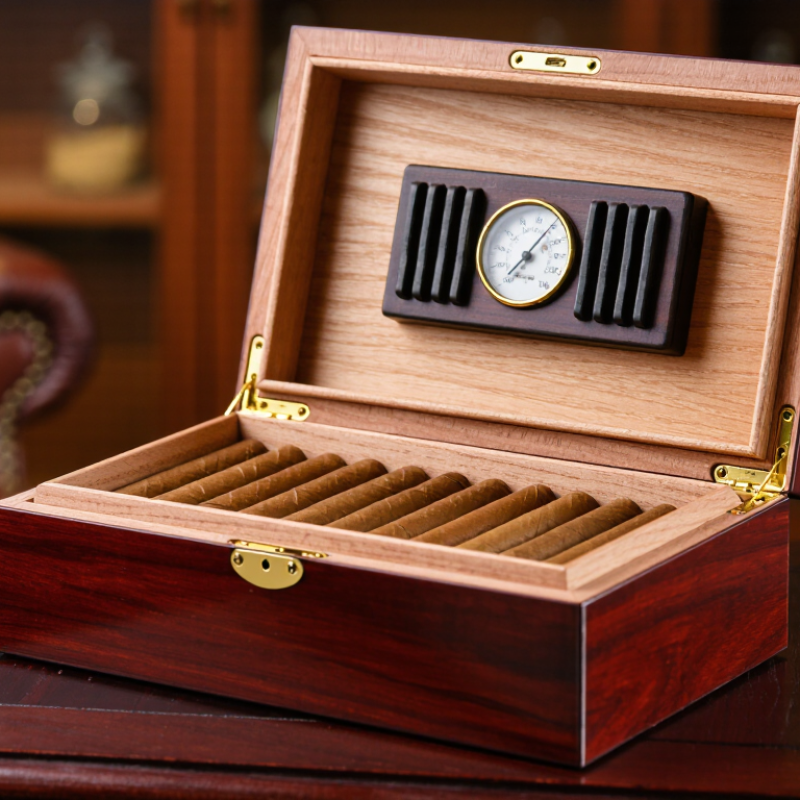
Define Your Humidor’s Capacity and Cigar Storage Needs
Choosing a wood humidor begins with an honest estimate of your cigar storage needs. Count the cigars you expect to keep, not just the number you own today. A box rated for 50 cigars may hold fewer large ring-gauge cigars. Thick wrappers and protective tubes also consume valuable space.
Leave about 20 percent of the interior open. This allows air to move around the cigars and gives you room for future purchases. A crowded humidor can create uneven humidity, especially near the corners. Small collections may suit a compact desktop box, while regular collectors need more capacity and adjustable dividers. Measure the interior dimensions carefully. Exterior size can be misleading.
I prefer untreated Spanish cedar lining because it supports stable humidity and adds a useful aroma. However, wood quality varies, and a beautiful finish does not guarantee reliable performance. Check the seal by closing the lid gently and testing for resistance. Use a calibrated hygrometer, then monitor readings for several days before storing cigars. I once chose a humidor based on its listed capacity and ignored cigar size. It looked spacious, but the usable area was disappointing. That mistake changed my buying process. Consider seasonal humidity changes, your local climate, and how often you open the lid. A humidor that matches your habits will usually perform better than a larger box that receives little attention.
Compare Wood Types, Construction Quality, and Interior Lining
How to Choose the Best Wood Humidor Box?
The outer wood affects appearance, weight, and long-term stability. Solid hardwood looks impressive, but it can expand with seasonal humidity changes. A quality veneer over stable plywood may resist warping better. Walnut offers a dense, refined surface, while mahogany provides warmth and moderate durability. Wood choice is not purely cosmetic. Ask how the panels were dried and joined. I once chose a beautiful box with poorly matched corners. It looked excellent, but the lid shifted after several weeks.
Construction quality deserves close inspection. The lid should close with gentle resistance, not slam or wobble. A soft, even contact around the rim helps reduce air exchange. Check the hinges, tray supports, and corner joints for gaps. Thin walls can feel light and attractive, yet they may react quickly to room temperature. Heavier construction is not automatically better. Sometimes it only hides weak internal fittings. A reliable box should include a stable hygrometer, but that instrument still needs occasional checking against a trusted reference.
The interior lining usually matters most. Spanish cedar is widely valued for its aroma, moisture buffering, and resistance to common storage pests. It should cover the interior cleanly, without excessive glue or rough splinters. A strong cedar smell can be unpleasant at first. Let the box air gradually. The lining should feel dry, smooth, and firmly attached. Do not assume every reddish wood is Spanish cedar. Ask for the wood’s actual identity and origin. Before regular use, condition the interior slowly and monitor changes for several days. That step takes patience. It is also where many otherwise careful buyers become careless.
How to Choose the Best Wood Humidor Box?
Compare wood types, construction quality, and interior lining before making a purchase.
Wood Type
Spanish cedar is lightweight and traditionally used for cigar linings. Mahogany offers greater hardness and dimensional stability, while American red cedar is lighter and more aromatic.
Construction Quality
Look for straight grain, well-fitted corners, smooth surfaces, and a lid that closes evenly without visible gaps. Consistent construction helps reduce unwanted humidity exchange.
Interior Lining
Choose an unfinished, clean lining with no paint, varnish, or strong chemical odor. Spanish cedar is widely preferred because it supports aroma development and humidity buffering.
Wood density and Janka hardness are approximate published averages and vary with species, growing conditions, and moisture content. These properties should be considered together with joinery, sealing, and lining quality.
Evaluate Humidity Control, Sealing Performance, and Airflow
Choosing a wood humidor box starts with humidity control, not decoration. In my testing, a stable hygrometer reading mattered more than polished hinges. Look for a calibrated hygrometer and a humidification system that releases moisture gradually. Small changes are normal. A box that swings from dry to damp can damage stored materials. Check whether the wood is properly seasoned, because raw wood may absorb moisture unpredictably.
Sealing performance is easier to assess than marketing claims. Close the lid slowly and listen for soft, even contact. A thin sheet of paper should resist when pulled from the closed edge. This simple test is useful, though it is not laboratory proof. Inspect corners, hinges, and the lid’s inner rim for gaps or uneven pressure. A strong seal should retain humidity, but it should not feel impossible to open. I once favored a tight lid and later found that poor adjustment created uneven moisture. That mistake changed my buying checklist.
Airflow needs balance. Ventilation holes or internal spacing can reduce stagnant pockets, especially near the bottom. However, excessive airflow may dry the contents faster than the humidifier can respond. Choose gentle circulation, not a drafty box. Place the humidor away from sunlight, heaters, and frequently opened windows. Record humidity at the same time each day for one week before trusting the setup. Readings can mislead when the sensor touches a wall or sits beside the moisture source. A practical trial often reveals flaws that photos hide.
Check Size, Maintenance Requirements, and Available Placement Space
Choosing the best wood humidor box starts with size, not appearance. Estimate your current collection, then add 20 to 30 percent extra capacity. Cigars need space for air movement, especially near the corners. A tightly packed box can create uneven humidity and slow aging. A box that is too large may also require more frequent monitoring.
Maintenance should fit your routine. Use a reliable hygrometer and check it weekly during the first month. Season the unfinished interior according to the manufacturer’s instructions, then avoid soaking the wood. Distilled water is generally safer for humidification systems than tap water. Wipe spills quickly with a soft, dry cloth. I have learned that “set and forget” is not realistic. Humidity can change after heating, air conditioning, or a sudden weather shift.
Placement matters more than many buyers expect. Choose a stable shelf away from windows, radiators, kitchens, and direct airflow. Keep the box level, with enough room to open the lid fully. A dark cabinet can protect the wood from sunlight, but it should still allow gentle ventilation around the exterior. Do not place it on a vibrating appliance. Check the location at different times of day; a cool morning corner may become hot by afternoon. No spot is perfect. The practical choice is the most stable one.
How to Choose the Best Wood Humidor Box? - Check Size, Maintenance Requirements, and Available Placement Space
| Humidor Size | Typical External Dimensions
(W × D × H) | Approximate Capacity | Required Placement Area | Recommended Location | Maintenance Frequency | Best For |
| Travel / Mini | 25 × 18 × 8 cm | 5–10 cigars | At least 30 × 23 cm | Briefcase, drawer, or small shelf | Check humidity before each trip; refill as needed | Occasional smokers and short-term storage |
| Small Desktop | 35 × 24 × 15 cm | 20–40 cigars | At least 40 × 30 cm | Desk, bedside cabinet, or compact bookcase | Inspect weekly; replenish humidity medium every 2–4 weeks | Beginners and personal collections |
| Medium Desktop | 45 × 30 × 20 cm | 50–80 cigars | At least 50 × 36 cm | Sturdy desk or ventilated display shelf | Check weekly; rotate cigars monthly; clean every 3–6 months | Regular smokers and growing collections |
| Large Desktop | 55 × 35 × 25 cm | 100–150 cigars | At least 60 × 42 cm | Large cabinet, sideboard, or reinforced shelf | Monitor twice weekly; replenish monthly; inspect seals quarterly | Enthusiasts who need organized storage |
| Cabinet-Style | 60 × 45 × 100 cm | 200–400 cigars | At least 70 × 55 cm, plus door clearance | Stable floor area away from sunlight and heat | Monitor several times per week; clean and inspect every 3 months | Large collections and long-term aging |
| Custom Large Cabinet | 80 × 50 × 150 cm or larger | 500+ cigars | At least 90 × 65 cm, with full access clearance | Dedicated room or strong, level flooring | Frequent monitoring; scheduled cleaning and seal inspection | Collectors requiring high-capacity storage |
Selection Checklist: Choose a location away from direct sunlight, radiators, air-conditioning vents, kitchens, and exterior walls with strong temperature changes. Allow extra space for opening the lid or door, air circulation, and routine humidity checks. A digital hygrometer and a properly sized humidity-control system help maintain a stable storage environment.
Balance Price, Features, and Long-Term Value Before Buying
How to Choose the Best Wood Humidor Box?
Price should be judged against control, durability, and maintenance. A low-cost box may look attractive, yet poor sealing can waste every later investment. The USDA Forest Products Laboratory’s Wood Handbook (2021) explains that wood constantly exchanges moisture with surrounding air. This movement can affect fit, joints, and internal stability. Choose solid, well-seasoned wood with tight hinges and an even lid gap. Buy stability. Not decoration.
Features should solve measurable problems. A calibrated digital hygrometer is more useful than decorative hardware. The NIST humidity measurement guidance stresses that sensor accuracy depends on calibration, temperature, and placement. Position the sensor away from direct moisture sources. A passive humidification system costs less, but it requires regular inspection. An electronic system may offer tighter control, though batteries and replacement parts increase ownership costs. ASHRAE Handbook guidance also supports monitoring humidity rather than trusting appearance alone.
Long-term value includes repairs, replacement seals, and usable capacity. Leave room for air circulation, instead of filling every corner. The Cigar Association of America’s industry data reports show that premium tobacco products are commonly stored as long-term purchases, making stable conditions financially relevant. Exact storage targets still vary by product and personal preference. That is easy to overlook. A common mistake is paying for elaborate features while ignoring the lid seal. Check it with a thin paper strip, then repeat the test after several weeks. Wood changes slowly. So should your buying decision.