How to Choose the Best Jewelry Pouch for Wholesale?
Choosing the best Jewelry Pouch for wholesale requires more than comparing unit prices. It demands practical judgment about protection, presentation, customization, and repeat ordering.
The global jewelry market reached approximately USD 353.26 billion in 2023, according to Fortune Business Insights. This scale increases pressure on wholesalers to deliver packaging that feels reliable and commercially polished. McKinsey’s packaging research also shows that consumers increasingly consider recyclability and material responsibility when evaluating products. A velvet pouch may look luxurious, yet synthetic fibers, excessive lining, or poor durability can weaken that impression.
Packaging specialist Lisa McTigue Pierce describes packaging as “the silent salesman.” Her point matters in jewelry wholesale. A pouch is handled before the jewelry is worn. Its drawstring, stitching, lining, and color quietly communicate quality. A loose cord can damage confidence. A rough interior can scratch delicate surfaces. Small failures become expensive when repeated across thousands of orders.
The right Jewelry Pouch should match the product, sales channel, and customer expectation. Cotton may suit handmade collections, while microfiber offers smoother protection for polished pieces. Recycled materials can support sustainability messaging, but only when suppliers provide clear material information. Claims without evidence create unnecessary risk.
Wholesale decisions are rarely perfect. A thicker pouch may improve protection but increase freight costs. A cheaper pouch may win the first quote and lose the second order. Therefore, buyers should request samples, test abrasion resistance, inspect stitching, and calculate total landed cost before approving production. Data helps. Hands-on testing matters more.
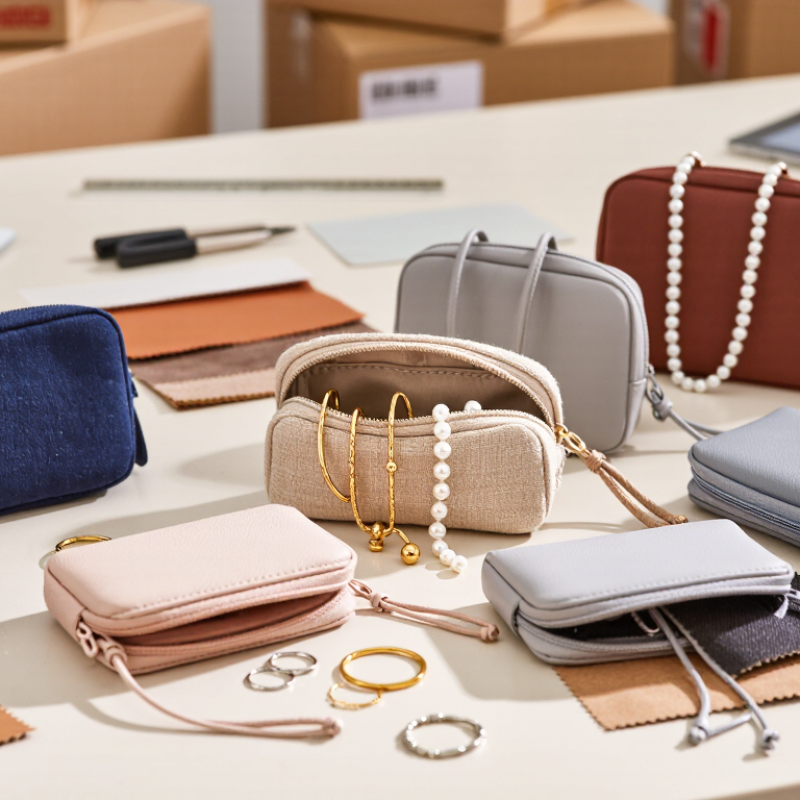
Define Your Wholesale Jewelry Pouch Requirements
How to Choose the Best Jewelry Pouch for Wholesale?
Define your wholesale jewelry pouch requirements before comparing suppliers. Start with the jewelry types you will pack, such as rings, earrings, bracelets, or layered necklaces. Each item needs suitable space, closure strength, and interior protection. Measure the jewelry carefully, including its thickness and chain length. A pouch that looks elegant may still cause tangling or pressure marks.
Consider the material, lining, color, printing method, and closure style. Velvet feels soft, while cotton may suit a natural retail theme. Drawstring pouches offer quick access, but snap closures can provide firmer protection. Specify pouch dimensions in millimeters, not vague terms like “medium.” Include acceptable color variation, stitching standards, logo placement, and packaging details. Small details matter.
I once approved a sample without checking the inner seam. It rubbed against delicate surfaces during transport. That mistake taught me to test real products, not empty samples. Some details get missed. Request a pre-production sample and inspect several pieces from the batch. Ask about material specifications, production capacity, quality checks, and defect handling. Confirm the minimum order quantity, lead time, carton size, and shipping weight. Keep these requirements in one written document. It reduces misunderstandings and makes supplier comparisons more reliable. Recheck your list after customer feedback, because the first version may not be perfect.
Compare Pouch Materials, Sizes, and Protective Features
Choosing jewelry pouches for wholesale starts with the material, not the appearance. In production tests, velvet feels soft and presents polished pieces well. However, it can collect dust and flatten during shipping. Cotton offers a natural texture and reliable breathability. It may crease more easily. Satin looks smooth and photographs attractively, yet its slippery surface can let small items shift. For frequent handling, microfiber often provides a practical balance between softness and scratch resistance. Material quality still varies. Check stitching, odor, colorfastness, and drawstring strength before placing a large order.
Size should match the jewelry, with a little room for movement. A pouch that is too tight can press chains and bend delicate parts. An oversized pouch allows earrings or pendants to collide. Measure each item in its normal presentation position. Small pouches suit rings and single pairs of earrings. Medium sizes work for bracelets and compact necklaces. Longer designs are safer for chains, especially with a soft interior divider. Ask for several samples. One size rarely fits every product.
Protective features deserve practical testing. A padded lining can reduce impact during ordinary handling, while a double drawstring helps keep contents secure. Smooth inner seams matter because exposed threads can catch clasps. Moisture-resistant fabric may help in humid storage, but it cannot replace dry packaging. I once favored thicker padding, then found it increased shipping volume and reduced shelf efficiency. That trade-off was easy to miss. Compare protection, packing density, and unit cost together. The best wholesale choice survives real handling without creating new problems.
How to Choose the Best Jewelry Pouch for Wholesale?
Compare pouch materials, practical sizes, and protective features before placing a wholesale order.
How to read the chart: Ratings use a 1–5 procurement benchmark, where 5 indicates stronger protection for the listed feature. EVA-lined polyester provides the best overall protection for shipping, while microfiber offers a balanced option for scratch-sensitive jewelry. Pouch sizes are recommended internal dimensions for common jewelry categories and should be adjusted for the item’s actual shape and packaging requirements.
Wholesale tip: Choose soft microfiber or velvet for presentation-focused collections, and select water-resistant PU leather or EVA-lined polyester when moisture, compression, and repeated handling are key concerns.
Evaluate Customization, Branding, and Design Options
How to Choose the Best Jewelry Pouch for Wholesale?
Choosing a jewelry pouch for wholesale is not only a price decision. It affects presentation, protection, packing speed, and repeat orders. Start by defining your jewelry types, average sizes, and shipment volume. Small earrings may need soft cotton interiors, while heavier pieces require stronger seams and wider openings. Request a physical sample before approving a large order. Check the zipper, drawstring, lining, stitching, and pouch dimensions by hand. A low price can hide weak construction.
Tips: Compare logo methods carefully. Screen printing suits simple artwork and larger quantities. Embroidery feels premium but may add weight and limit fine details. Heat transfer can show colorful designs, yet rubbing tests are essential. Ask for color references and production samples. Branding should remain visible without overpowering the jewelry. Leave enough clear space for a logo, care message, or small product code.
Design consistency matters across sizes and colors. Match the pouch shape with your packaging workflow, especially if staff pack hundreds of pieces daily. Consider neutral tones for broad appeal, but test darker materials for lint and fading. I once underestimated drawstring length; the pouch looked attractive but opened slowly during packing. That mistake changed my approval checklist. Review print alignment, odor, loose threads, and color variation between samples. A practical design may look less dramatic, but it usually performs better in long-term wholesale use.
Assess Supplier Quality, Pricing, and Order Flexibility
Choosing the best jewelry pouch for wholesale starts with supplier evidence, not attractive samples. Ask for material specifications, stitching tolerances, colorfastness results, and production photos. A credible supplier should explain fiber content, lining weight, closure strength, and inspection procedures. Request a pre-production sample. Then test it with a ring box, necklace, and rough handling. Small failures become expensive at scale.
Compare landed cost, not unit price. Include sampling, pouch packaging, freight, applicable duties, and defect allowances. McKinsey’s 2023 packaging research reports that 60–70% of consumers may pay more for sustainable packaging. That does not justify an automatic premium. Ask whether recycled fabric, low-ink printing, or reusable construction changes the price. Get tiered quotations for 500, 2,000, and 10,000 pieces. Require written rules for tooling, revisions, and overage.
Order flexibility protects cash flow. Check minimum order quantity, split shipments, reorder lead time, and cancellation terms before approval. DHL’s 2024 E-Commerce Trends Report found that 72% of shoppers consider sustainability important. Expectations are moving, although wholesale budgets remain stubborn. I would not rely on one survey. Test a small batch, record defects, and compare delivery accuracy. A supplier who accepts measurement is safer than one promising perfection. Leave room for mistakes.
Select the Best Pouch Through Sampling and Cost Analysis
Choosing the best jewelry pouch for wholesale requires more than comparing unit prices. Sampling should test fabric feel, stitching, drawstring strength, print accuracy, and tarnish protection. I usually request three samples from the same specification. Then, I place rings and necklaces inside each pouch for several days. This reveals loose fibers, color transfer, and awkward sizing.
Cost analysis must include more than the factory quotation. Record the sample fee, tooling charge, packaging, freight, inspection, and possible defect allowance. A pouch costing $0.18 may become $0.27 after these expenses. Small differences matter at 10,000 units. A common mistake is choosing the cheapest pouch before testing durability. That decision can create repacking labor and customer complaints.
Material selection also affects perceived value. PwC’s 2024 Voice of the Consumer Survey found that 46% of consumers reported buying more sustainable products. It also found that consumers were willing to pay an average 9.7% premium for sustainable goods. These figures support testing recycled cotton, paper-based fabric, or reusable designs, but only when performance remains reliable. Ask suppliers for material composition and production details. Claims without documentation deserve caution. My own sampling process is not flawless; lighting can distort color, and one sample cannot represent every production batch. Therefore, approve a pre-production sample and inspect a random shipment before final payment.
How to Choose the Best Jewelry Pouch for Wholesale? - Select the Best Pouch Through Sampling and Cost Analysis
| Pouch Type | Typical Material | Common Size | Sample Cost / Unit | Wholesale Unit Cost
(1,000 Units) | Estimated Product Cost
(1,000 Units) | Typical MOQ | Sample Lead Time | Protection Level | Best Use | Overall Score |
| Velvet Drawstring Pouch | Polyester velvet | 7 × 9 cm | US$0.25–0.60 | US$0.28–0.55 | US$280–550 | 500–1,000 | 7–12 days | High | Premium rings, earrings and gift sets | 4.7 / 5 |
| Cotton Drawstring Pouch | Unbleached or dyed cotton | 8 × 10 cm | US$0.20–0.50 | US$0.22–0.48 | US$220–480 | 500–1,000 | 8–14 days | Medium | Everyday jewelry and natural-style packaging | 4.5 / 5 |
| Microfiber Pouch | Polyester microfiber | 7 × 9 cm | US$0.18–0.40 | US$0.16–0.35 | US$160–350 | 1,000–2,000 | 7–12 days | High | Polished metals and scratch-sensitive pieces | 4.4 / 5 |
| Organza Pouch | Polyester organza | 7 × 9 cm | US$0.12–0.30 | US$0.10–0.25 | US$100–250 | 1,000–3,000 | 5–10 days | Low to Medium | Event favors and lightweight promotional items | 3.8 / 5 |
| Linen-Blend Pouch | Linen and cotton blend | 8 × 10 cm | US$0.35–0.75 | US$0.38–0.72 | US$380–720 | 500–1,000 | 10–16 days | Medium | Eco-focused collections and artisan jewelry | 4.2 / 5 |
| Recycled Polyester Pouch | Recycled polyester fabric | 8 × 10 cm | US$0.30–0.65 | US$0.32–0.60 | US$320–600 | 1,000–2,000 | 10–16 days | Medium to High | Sustainability-led retail programs | 4.1 / 5 |
Cost analysis basis: Estimated product cost equals the wholesale unit-cost range multiplied by 1,000 units. Prices are typical planning ranges for standard sizes, materials, drawstrings and one-color decoration; custom fabrics, complex artwork, individual packaging, freight, duties and taxes are excluded.