
What Is an Automatic Labeling Machine and How Does It Work?
An Automatic Labeling Machine applies labels to products, containers, cartons, or packages with controlled speed and placement. It replaces much of the repetitive handwork found on production lines. In a typical setup, containers move along a conveyor while sensors detect their position. A label roll feeds through the machine, and an applicator presses each label onto the target surface. The control system coordinates these actions within fractions of a second.
The process looks simple. It is not always simple. Product shape, material, label adhesive, line speed, and surface cleanliness can affect accuracy. A round bottle may rotate slightly, while a dusty carton can cause poor adhesion. Experienced operators usually adjust sensor timing, roller pressure, and label tension during setup. These details often decide whether a machine performs reliably for hours.
This guide explains what an Automatic Labeling Machine is and how its main components work together. It also examines common machine types, operating steps, production benefits, and practical limitations. Real performance depends on proper installation, routine cleaning, and consistent quality checks. Even advanced equipment can place a label unevenly when conditions change. That deserves attention.
Readers will gain a clearer basis for comparing machines and planning a suitable labeling process. The discussion focuses on observable operations, measurable output, and responsible equipment use. It avoids exaggerated claims. A machine should support a production team, not replace careful judgment.
What Is an Automatic Labeling Machine?
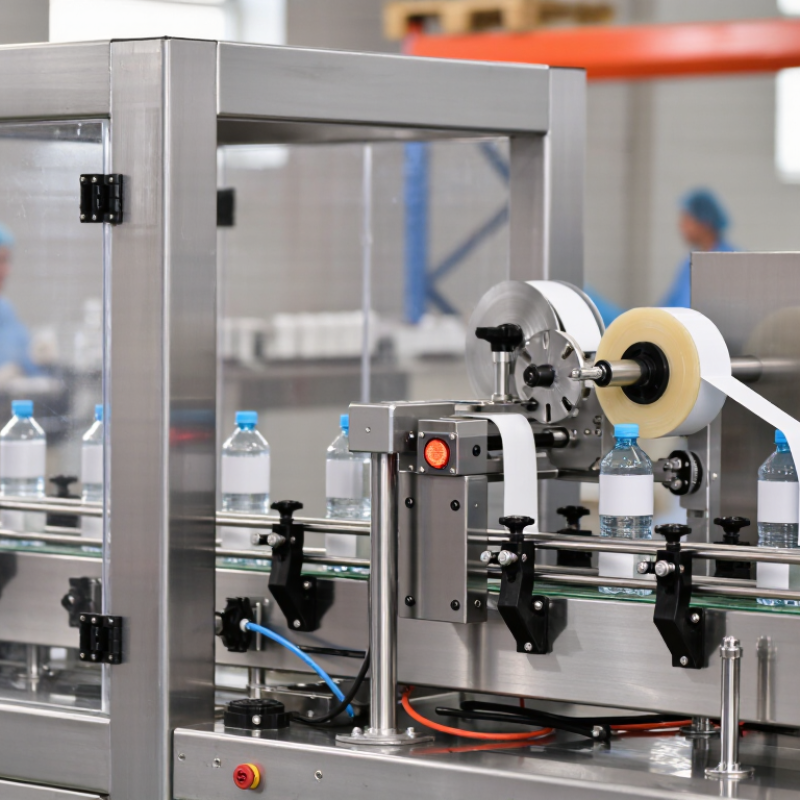
An automatic labeling machine is equipment that applies adhesive labels to products, containers, cartons, or packages with limited human handling. It usually combines a conveyor, label dispenser, application mechanism, sensors, and a control system. The machine can place labels on flat surfaces, round bottles, or selected package sides. Its main purpose is consistent placement, faster output, and fewer manual errors.
The operating process is straightforward. A conveyor moves each product into position. A sensor detects its front edge and sends a signal to the controller. The dispenser separates one label from its backing material, while a roller, pad, or air applicator presses the label onto the surface. A verification sensor may check whether the label exists and sits correctly. Small adjustments matter. Conveyor speed, label tension, product spacing, and surface cleanliness all affect results.
In real production settings, automatic labeling machines work best with stable product dimensions and carefully prepared labels. Dust, moisture, uneven surfaces, or changing package gaps can cause wrinkles and missed applications. A practical weakness is often overlooked: automation does not remove the need for setup and inspection. Operators still calibrate sensors, replace label rolls, and monitor rejected products. The machine may appear precise, but poor alignment at the start can repeat across hundreds of packages.
What Are the Main Components of an Automatic Labeling Machine?
An automatic labeling machine applies pressure-sensitive, wraparound, or other labels to products without continuous manual placement. Its core system combines product handling, label control, sensing, and electronic coordination. Grand View Research estimates that the global labeling equipment market will expand steadily through 2030, driven by faster packaging lines and stricter traceability needs.
The conveyor carries each container at a controlled speed. A timing screw, belt, or guide rail keeps spacing consistent. The product sensor detects the arriving container. A label sensor reads the gap between labels. Then, the programmable controller synchronizes the dispensing motor with product movement. The label reel, unwind shaft, tension rollers, and peel plate form the dispensing assembly. The applicator roller presses the label onto the surface. Small details matter here. Dust, uneven containers, or incorrect tension can create wrinkles.
The machine also needs a frame, drive motors, control panel, and safety interlocks. Many systems use vision inspection to check position, code readability, or missing labels. A 2023 PMMI packaging automation report identified labor availability and production flexibility as major reasons for investing in automation. Yet automation is not magic. A poorly calibrated sensor still produces repeated errors, only faster. The operator must adjust speed, pressure, and sensor distance for each container. That practical judgment is often underexplained in equipment brochures. Calibration records and routine cleaning improve reliability, but they cannot replace careful observation.
What Is an Automatic Labeling Machine and How Does It Work? - What Are the Main Components of an Automatic Labeling Machine?
| Main Component | Primary Function | Typical Operating Data | How It Works in the Labeling Process |
|---|---|---|---|
| Machine Frame and Guards | Supports the machine modules and protects operators from moving parts. | Common construction: stainless steel or powder-coated steel; typical working height: approximately 750–950 mm. | Maintains alignment between the conveyor, label dispenser, sensors, and applicator while safety guards limit access during operation. |
| Conveyor and Product Guides | Moves products through the labeling station at a controlled speed and position. | Typical line speed: about 10–40 m/min; guide width is adjustable to suit the product. | The conveyor presents each product consistently so the label can be applied at the programmed location. |
| Label Roll Holder | Holds the reel of pressure-sensitive labels and allows it to unwind smoothly. | Typical roll capacity: approximately 250–400 mm outside diameter, depending on the machine design. | The label web is fed from the roll into the tension and dispensing system without damaging the liner or labels. |
| Web Tension and Unwinding System | Controls the movement and tension of the label backing material. | Uses dancer arms, friction control, magnetic braking, or motorized unwinding; tension must remain stable to prevent web drift. | Regulates label-web release so labels arrive at the peel plate at a consistent pitch and speed. |
| Drive Roller and Nip Roller | Pulls the label web through the machine and maintains traction. | Usually driven by a servo motor or stepper motor; speed is electronically adjustable. | The rollers meter the web length required for each label and synchronize label delivery with product movement. |
| Peel Plate or Dispensing Edge | Separates the pressure-sensitive label from its backing liner. | Uses a sharp, smooth edge with a controlled bend radius; the angle depends on label material and adhesive. | As the liner bends around the edge, the label continues forward while the liner changes direction and returns to the waste path. |
| Applicator Roller, Brush, or Air Tamp | Transfers and presses the label onto the product surface. | Applicator choice depends on product geometry; contact rollers suit flat or cylindrical surfaces, while air systems suit irregular surfaces. | It removes air pockets and improves adhesion after the label has been dispensed onto the product. |
| Product Detection Sensor | Detects when a product reaches the labeling position. | Common sensor types: photoelectric, diffuse-reflective, through-beam, or ultrasonic sensors. | Sends a trigger signal to the controller, which calculates the correct delay before label dispensing begins. |
| Label Gap or Registration Sensor | Detects the gap between labels or a printed registration mark. | Typically uses optical sensing; transparent labels may require specialized ultrasonic or capacitive detection. | Confirms the position of each label so the machine can stop or advance the web accurately at the peel point. |
| Encoder | Measures conveyor or product movement to maintain speed synchronization. | Provides pulses proportional to conveyor travel; resolution varies by encoder and application. | Allows the controller to adjust label dispensing when conveyor speed changes, reducing position errors. |
| PLC or Motion Controller | Coordinates sensors, motors, timing, alarms, and machine sequences. | Controls product delay, label length, dispensing speed, acceleration, and fault logic. | Processes input signals and sends commands to the drive motor and applicator in the correct sequence. |
| HMI Control Panel | Provides an interface for setup, operation, diagnostics, and parameter adjustment. | Common settings include label position, product delay, conveyor speed, and label-count limits. | Operators select a product recipe, adjust operating parameters, and view warnings or maintenance messages. |
| Waste Liner Rewinder | Collects the used backing liner after labels have been dispensed. | Usually uses a motorized take-up reel with adjustable torque or speed control. | Keeps the waste liner organized and prevents loose material from interfering with the conveyor or labeling head. |
| Safety Interlocks and Emergency Stop | Stops hazardous motion and supports safe access for operators and maintenance personnel. | Typical devices include guarded-door switches, emergency-stop buttons, and motor overload protection. | Interrupts machine operation when a guard is opened, an emergency stop is pressed, or a critical fault is detected. |
Note: Operating ranges are representative values for common automatic pressure-sensitive labeling systems. Actual specifications depend on product shape, label material, adhesive, machine configuration, and required production speed.
How Does an Automatic Labeling Machine Apply Labels Step by Step?
An automatic labeling machine applies labels through a controlled sequence of feeding, sensing, positioning, and pressing. The process begins when an operator loads a roll of labels onto the unwind spindle. A tension system keeps the web steady. Poor tension can cause wrinkles.
A conveyor carries each container toward the labeling station. A photoelectric sensor detects the container’s front edge. The controller then releases one label at the correct moment. A peel plate separates the label from its backing paper. An applicator roller presses the adhesive surface onto the container. For bottles, a wrap belt may rotate the product and create a smooth overlap. A second sensor checks label presence, position, or spacing. Products with missing labels can move to a reject station.
Timing matters most. Conveyor speed, sensor delay, label gap, and container diameter must work together. A small adjustment can change the label position by several millimeters. Operators usually test several containers before production begins. That practical step is easy to underestimate. Dust, uneven surfaces, and changing temperatures can still reduce accuracy.
The International Federation of Robotics reported 541,302 industrial robot installations worldwide in 2023, showing continued investment in automated production. PMMI packaging research also highlights labor availability and flexible equipment as important industry concerns. Automatic labeling supports both goals, but it is not completely self-correcting. Regular cleaning, calibration, and inspection remain necessary.
What Types of Products Can Automatic Labeling Machines Label?
Automatic labeling machines serve far more products than standard bottles. They can label glass jars, plastic containers, metal cans, cartons, pouches, tubes, and small vials. Their systems detect each item, position it, apply adhesive or pressure-sensitive labels, and check placement with sensors or cameras.
Product shape matters. Cylindrical bottles usually receive wraparound labels at high speed. Flat cartons can accept front, back, or tamper-evident labels. Flexible pouches need careful tension control because their surfaces move during application. Tapered jars, textured containers, and cold bottles are harder to label accurately. In real production, dust, moisture, and uneven surfaces often cause more failures than expected. Small adjustments matter.
According to Grand View Research, the global labeling equipment market was valued at about 3.6 billion dollars in 2023. Its report projects continued growth through 2030, supported by packaged food, beverages, pharmaceuticals, and personal-care products. PMMI’s 2024 automation research also identifies labor shortages and consistent quality as important reasons for adopting automated equipment. However, one machine rarely fits every product. Container material, label size, line speed, and regulatory information must be tested together. A successful trial should measure placement accuracy, changeover time, waste, and rejected units, not speed alone. Mistakes still happen.
How Should an Automatic Labeling Machine Be Selected and Maintained?
An automatic labeling machine applies labels to containers with controlled speed and consistent placement. It usually combines a conveyor, label roll, sensor, drive motor, and control system. When a container passes the sensor, the machine releases and presses the label onto its surface.
Selection should begin with the product, not the machine’s advertised speed. Check container shape, material, diameter, and surface texture. Round bottles, flat cartons, and tapered jars need different handling methods. Measure the required output during real production conditions. A machine that runs quickly without stable alignment can create more waste. Test actual containers and labels before purchase. Small differences in label thickness or adhesive can affect feeding. It sounds minor.
Consider adjustment range, cleaning access, operator training, and spare-part availability. Clear controls reduce setup errors. Safety guards and emergency stops should also be practical, not decorative. A faster machine is not always better.
Maintenance needs a simple routine. Remove label scraps and adhesive from rollers, sensors, and guide rails each shift. Inspect belts, rollers, and applicator pads for wear. Keep sensors clean and confirm their position after format changes. Lubricate approved moving parts according to the service manual. Record jams, misalignment, and rejected products. These records often reveal problems before failure. However, operators may skip them during busy shifts. That weakness should be addressed with short checklists and regular training. Recalibrate the machine after major adjustments, and replace damaged components before they affect product quality.
